Beyond national maps: what ten years of monitoring the Danube falcon tell us
Sep. 21, 2026
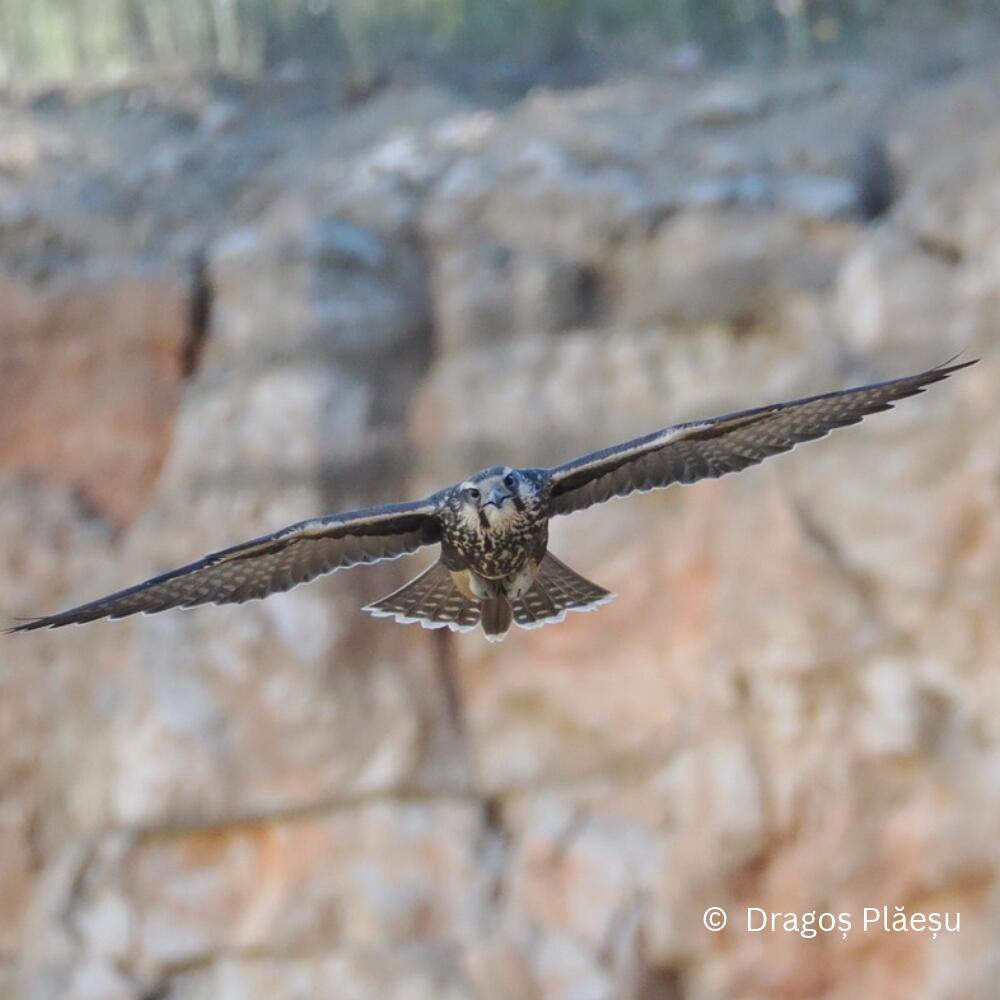
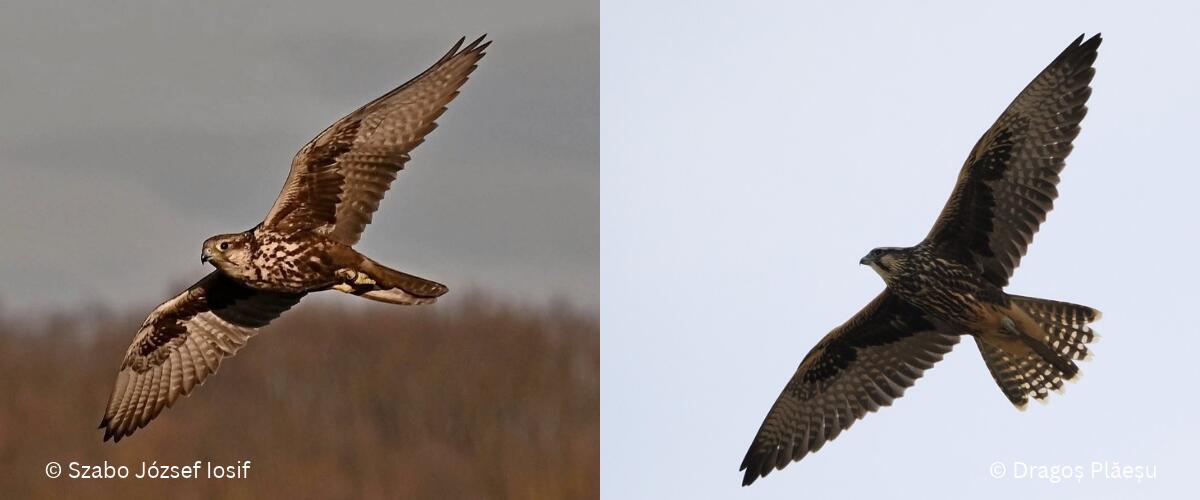
Despite the expression “free as a feather”, political borders can affect populations of migratory species, and their effective conservation requires a perspective that goes beyond the administrative boundaries of states. A recent study, to which our colleagues Judit Veres-Szászka and Ciprian Fântână also contributed, analyzes the evolution of the European population of the Danube falcon (Falco cherrug) during the period 2012–2022, highlighting significant differences between different regions of the continent.
By bringing together national data in an overall analysis, the research indicates trends that may remain hidden when populations are assessed separately and highlights the importance of cross-border cooperation for protecting the species in the long term.
Studies conducted over the past 20 years have looked at the Saker Falcon only through the lens of national data, without analyzing the entire population as a whole. The study Beyond borders: a decade of change in Europe's saker falcon population changes the perspective: it assesses breeding pairs and current trends across borders, focusing on real, geographical and functional links between subpopulations.
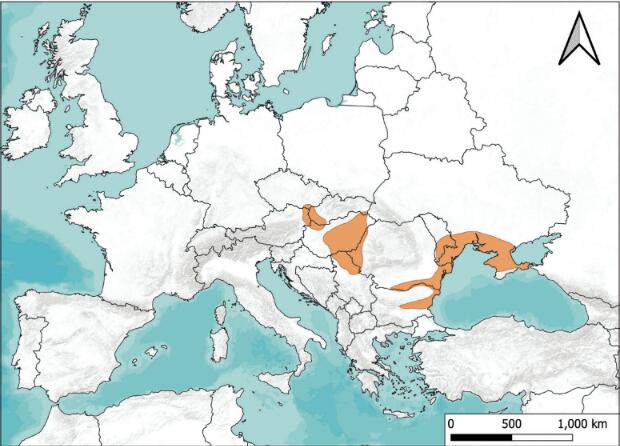
In the past, the European Saker Falcons nested in lowland hill and mountain areas. Today, the nesting territories have almost completely shifted to lowland areas. The Eurasian range of the species, once uninterrupted, is now highly fragmented, mainly due to changes in land use, a factor that has added to other threats to this species (poaching, pesticide use, decreased food sources).
The European population reached its lowest point in the 1970s and 1980s, surviving in Central Europe in two distinct cores: the mountains of Hungary and the mountains of Slovakia. While Saker Falcon populations have steadily declined across much of their range, Central Europe has seen an increase in recent decades, in stark contrast to the situation in Eastern Europe.
The evolution of the European population differed strongly between the two major regions :
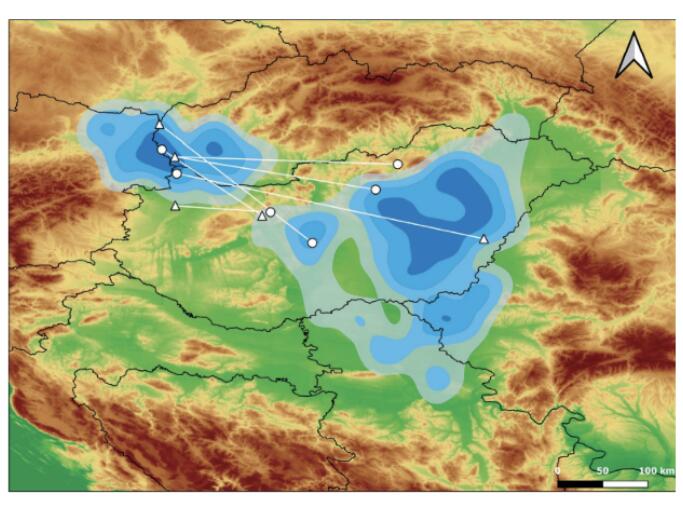
Central Europe (from eastern Czech Republic and Austria to southern Slovakia, Hungary, northern Serbia and western Romania): In recent decades, there has been a population increase. This is favored by the mosaic habitats, which provide sufficient food, and the installation of artificial nests. The region hosts two nuclei between which the exchange of individuals is low (less than 8%).
Eastern Europe / Black Sea region (southwestern Russia, southern Ukraine, the Republic of Moldova, eastern Romania and Bulgaria): the population in this area is experiencing a sharp decline.
National analyses have masked this reality: total populations appear stable only due to increases in Central Europe, which numerically compensate for decreases in the Pontic region. Currently, the European population numbers less than 700 breeding pairs.
The ecological link between Central European and Black Sea populations
Data from ringing and satellite transmitters have demonstrated the connection between the Central European and Black Sea populations, but most of the birds were young, wandering individuals. There is only one documented case of a bird permanently migrating to breed: a young female ringed in western Romania in 2013 bred the following year in Crimea. This extremely low connectivity represents a silent threat; without a constant flow of individuals, local disasters (such as avian influenza outbreaks or severe weather events) can devastate isolated populations without the possibility of rapid recolonization.
Why are conservation efforts important for less than 12% of the global population?
Globally, the conservation status of birds of prey paints a grim picture: more than half (52%) of the 557 species are experiencing population declines, with 18% on the brink of extinction. These species are good indicators of ecosystem health. They are top predators, and protecting them indirectly ensures the survival of many other species that use the same habitats.
The global population of the Saker Falcon is estimated to be between 6,100 and 14,900 breeding pairs. This means that Europe is home to between 4.7% and 11.4% of the global total . However, recent research shows that European Sakers have a distinct and valuable genetic pool, characterized by a low level of inbreeding. Modern conservation strategies prioritize the preservation of genetic diversity.
Unfortunately, this genetic treasure is extremely vulnerable in Eastern Europe due to acute anthropogenic threats:
accelerated decline in small mammal populations (main trophic base) as a result of land use changes;
dislocation and disturbance caused by wind farm development;
nest poaching;
removing nests from power lines during maintenance work, without providing alternatives, such as placing nesting boxes;
the direct and indirect impact of armed conflicts in the region.
The stability of the Danube falcon in Europe is apparent: the increase in Central Europe – due to the existence of mosaic habitats, which allow pairs to raise a larger number of chicks, finding sufficient food and helped by the addition of nesting sites – masks the dramatic decline in Eastern Europe. Therefore, it is extremely important that coordinated actions at cross-border level, such as those in the project Ensuring the recovery of the Danube falcon population, an endangered species in Bulgaria and southern Romania (LIFE20 NAT/BG/001162) are continued so that, in the near future, the species Falco cherrug can be classified as “Least Concern”.
The scientific article Beyond borders: a decade of change in Europe's saker falcon population , published in the journal Ornis Hungarica, can be consulted online, here.
We use cookies to improve our services. As you proceed to browsing this website you accept the usе of cookies.

 en
 Български
 Română