
 en
 Български
 Română
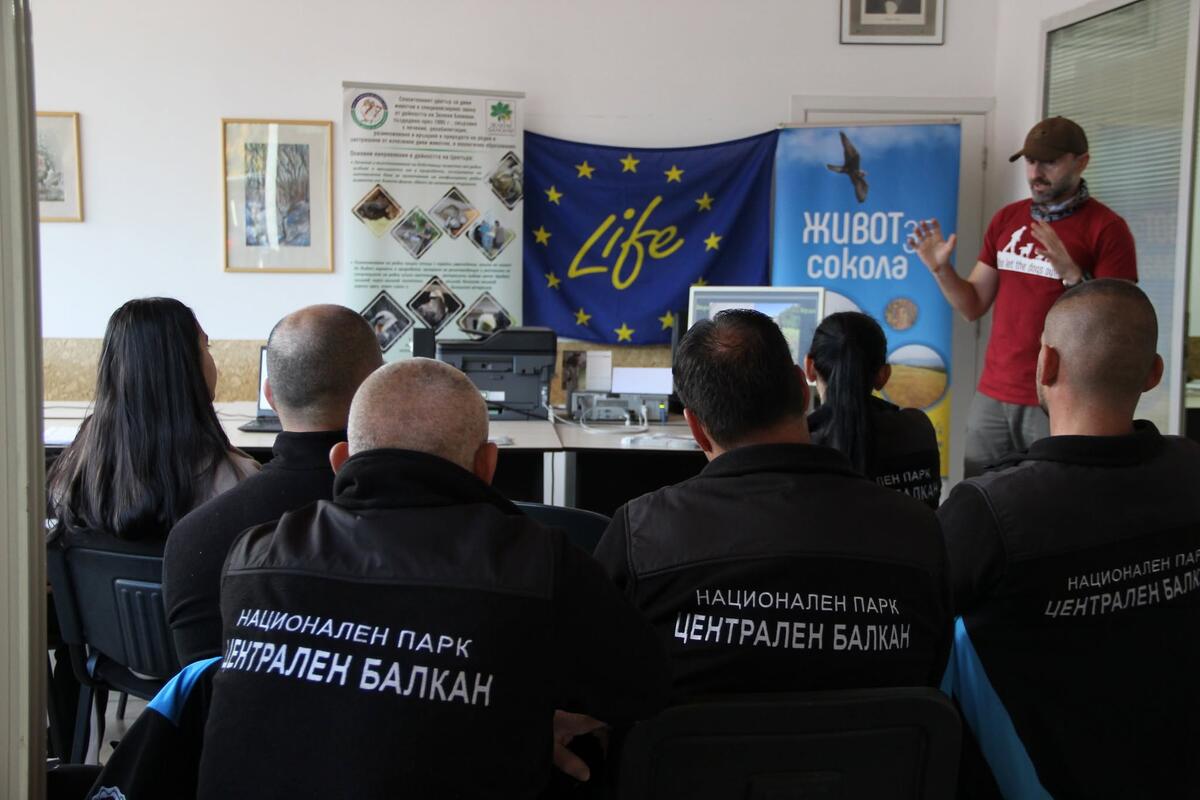
Pictures: Central Balkan National Park
How can signs of wildlife poisoning be recognised? What steps should be taken when a wildlife poisoning incident is suspected, and how should people respond without putting themselves or others at risk? These were some of the key questions addressed during a specialised training session organised by the LIFE for Falcons project team of the Bulgarian Society for the Protection of Birds (BSPB) and the Wildlife Rescue Centre of Green Balkans for staff of the Central Balkan National Park Directorate.
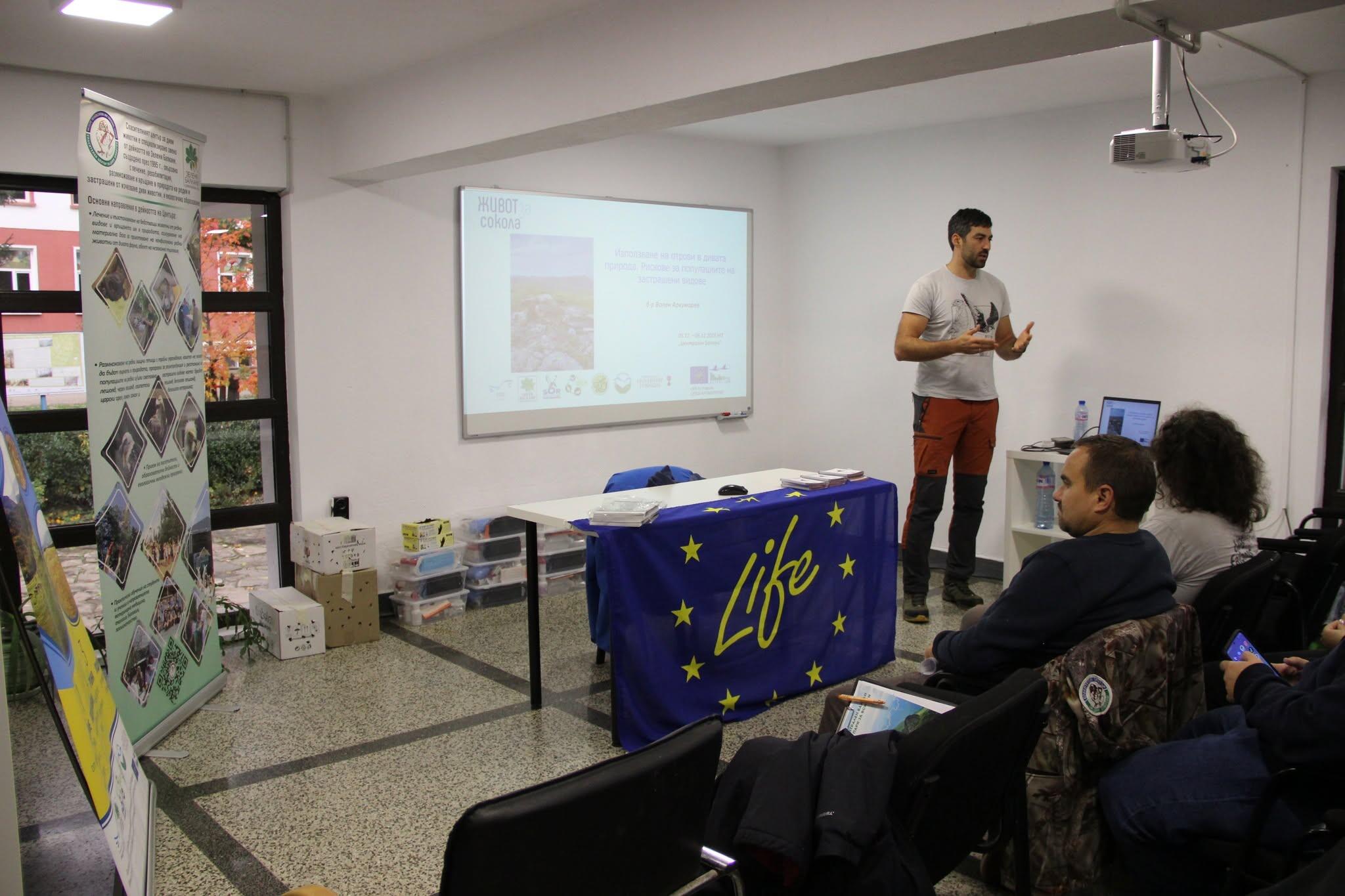
The training took place over two consecutive days. The first session was held for staff from the Northern Park Sections of the Park Control and Protection Department at the Museum of Natural Sciences in Cherni Osam, while the second was organised for the Southern Park Sections at the Directorate’s office in Kalofer.
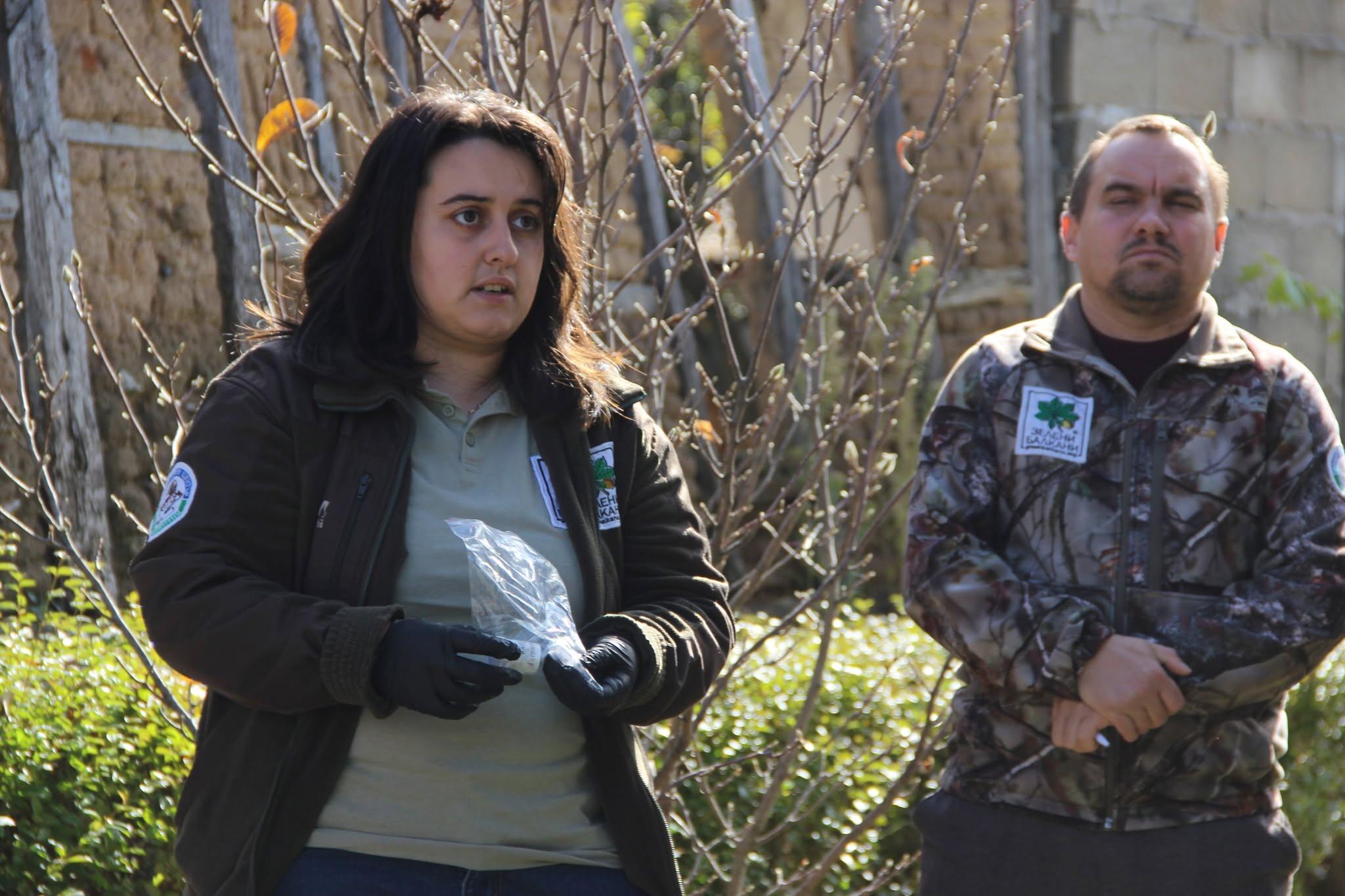
Participants were introduced to the protocol for responding to suspected wildlife poisoning incidents and the key steps to follow when poisoned baits or affected animals are discovered. Particular attention was given to a practical demonstration by Buda, a specially trained detection dog, and his handler, Nikolay Terziev from BSPB. They demonstrated how the dog searches for and detects poisoned baits and other hazardous substances in the wild.
The practical session also included guidance on providing first aid to injured wildlife.
A timely response and adherence to the proper protocol are crucial in such incidents. Poisoned baits can affect not only the animals they are intended to target, but also many other species, including endangered birds of prey such as vultures and eagles. This makes training the staff who work in the field every day an important part of efforts to tackle this threat.